
Foam Nickel Loaded ZIF-62 (Co) Glass for Persulfate Activation and Pollutant Degradation was published in Applied Catalysis B: Environment and Energy. As the top publication of the first division of the Chinese Academy of Sciences in the cross field of catalysis, environment and energy under Elsevier, it is the core publishing platform for global environmental catalysis research, and the industry recognition ranks among the world's top.
Applied Catalysis B: Environment and Energy has an impact factor of 22.1 in 2025, with a five-year average IF exceeding 20 and CiteScore reaching as high as 38.6; Ranked in the top 1% of the world's environmental science disciplines, chemical engineering, physical chemistry, and environmental engineering are all ranked first in Q1, and are recognized as authoritative achievement indicators in the industry.
Expert Wang Chongchen, currently the director of the Beijing Key Laboratory of Building Structure and Environmental Remediation Function at Beijing Jianzhu University, and a professor at Beijing Jianzhu University, is also a leader in MOF environmental catalysis and water pollution control in China.

Wang Chongchen's team innovatively made use of the melting plasticity of MOF glass to prepare foam nickel loaded ag-ZIF-62 (Co) integrated immobilized catalyst, and overcome the industry pain points of powder MOF that are easy to lose and have poor stability: fully degrade endocrine disrupter bisphenol A in 15 minutes, efficiently decontaminate high salt chloride ion water in 2 minutes, and maintain the degradation rate of 99.9% after 120 hours of stable operation of the continuous flow device. At the same time, through DFT theoretical calculation and multi-dimensional characterization, it fully clarifies the cooperative degradation mechanism of free radicals and non free radicals, providing a new idea for the design of long-acting industrial wastewater treatment catalyst.
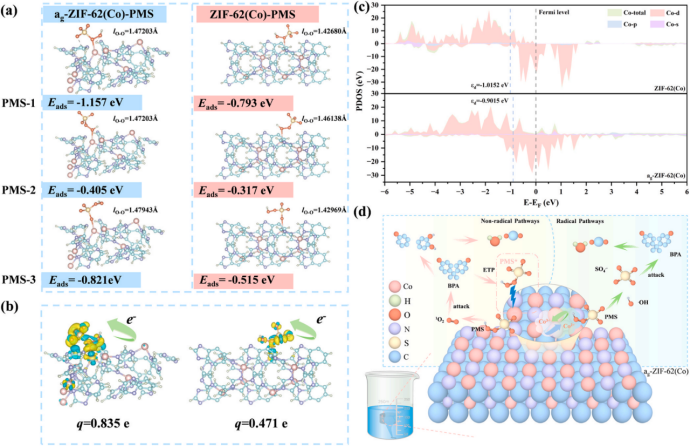
▲ Comparative analysis of DFT computer theory in PMS activation process of foam nickel supported MOF glass catalyst and crystalline MOF catalyst
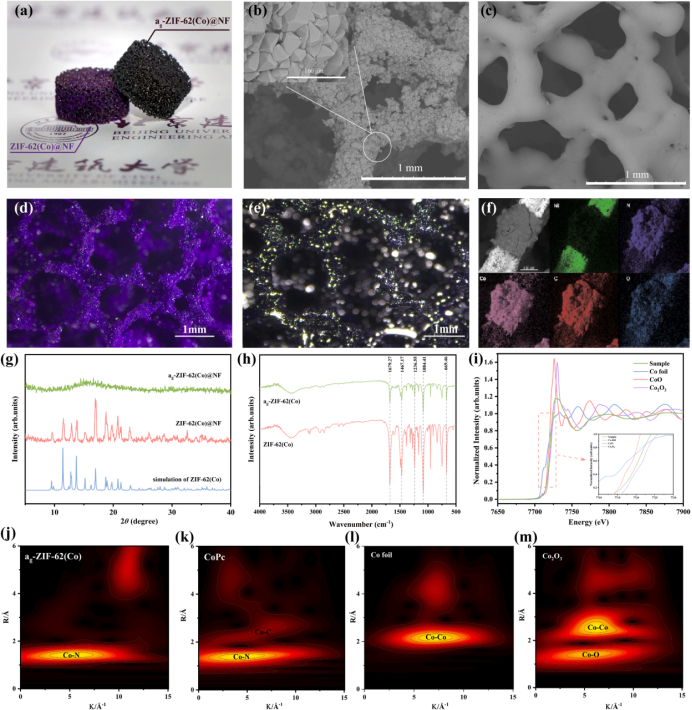
▲ Purple/black purple foam nickel is intuitive
In the entire complex water environment interference experiment and actual inorganic ion quantitative testing of water samples, the team used SHINE CIC-D160+ion chromatograph to achieve precise detection. Various anions such as Cl -, HCO3-, NO3-, H2PO4-, etc. in real surface water and saline wastewater are key variables that affect catalytic efficiency. Only by accurately measuring the concentrations of various ions can the promotion/inhibition laws of the water matrix on the catalytic system be clarified. The core conclusions in the paper, such as chloride ion enhancement and bicarbonate inhibition, are all supported by stable and high-precision data from Shenghan chromatography. The performance of the equipment with constant temperature control, stable flow rate, and low detection limit perfectly adapts to the needs of environmental catalysis research for trace water samples and multi-component anion synchronous analysis. It replaces imported instruments to complete a complete set of quantitative characterization, laying a solid data foundation for the entire top tier research.