
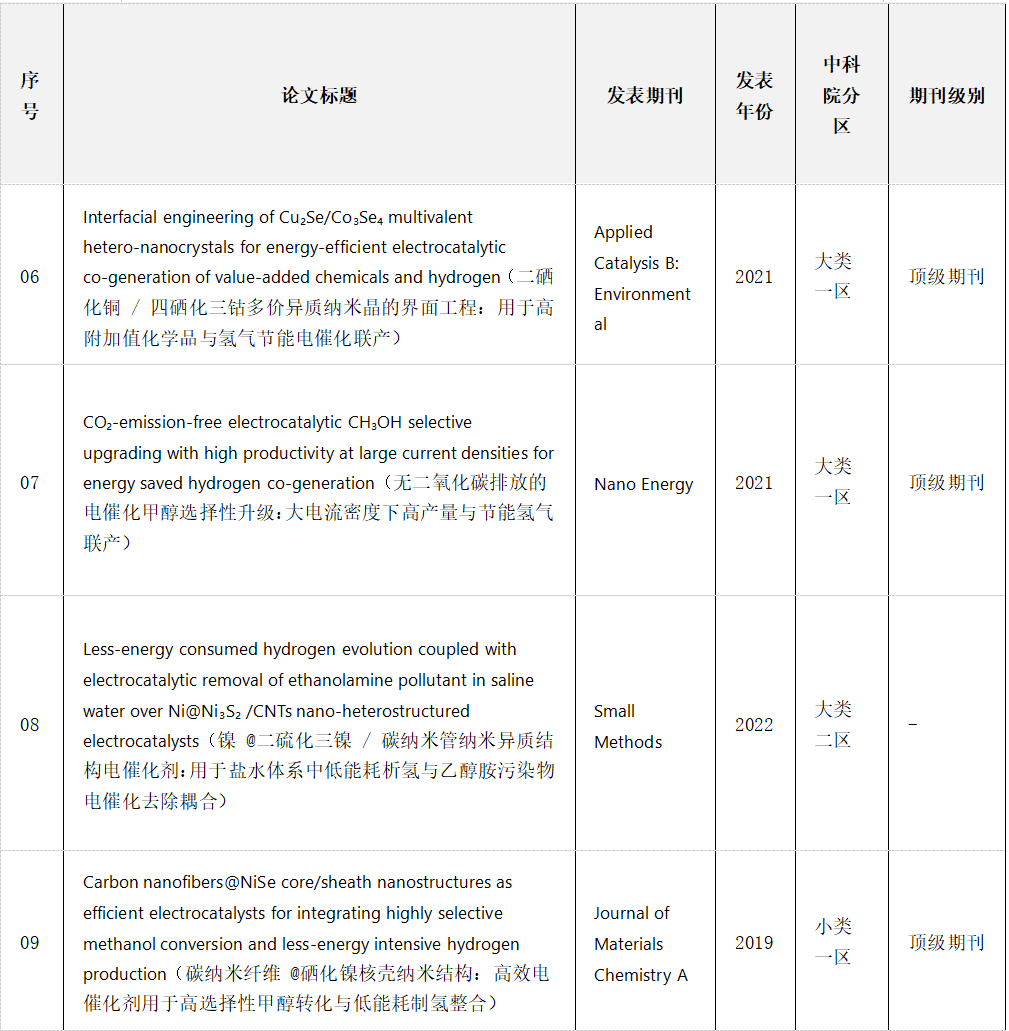
The research team led by Professor Zhao Bin from the College of Materials, Shenzhen University, has achieved a series of accomplishments in the fields of electrochemical catalysis and energy conversion. They have published 9 high-level papers in international top journals such as Advanced Materials and Nano-Micro Letters (Impact Factor: 36.3), representing the global cutting-edge level in related research fields.
The qualitative and quantitative analysis of core products in all papers was completed using ion chromatographs from SHINE. The accurate detection data provided solid support for the research conclusions, becoming an indispensable "detection tool" behind the top journal achievements.
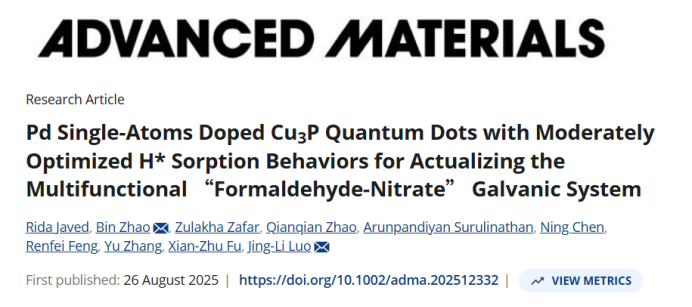
"Pd Single-Atoms Doped Cu₃P Quantum Dots with Moderately Optimized H* Sorption Behaviors for Actualizing the Multifunctional "Formaldehyde-Nitrate" Galvanic System", led by Professor Zhao Bin's team, was published in Advanced Materials, a top-tier journal in CAS Category I. This study addressed issues such as single functionality and limited catalytic performance in the "formaldehyde-nitrate" electrochemical system, innovatively designing a palladium (Pd) single-atom doped copper phosphide (Cu₃P) quantum dot catalyst.
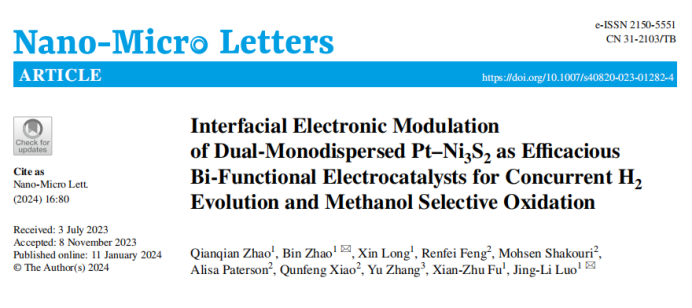
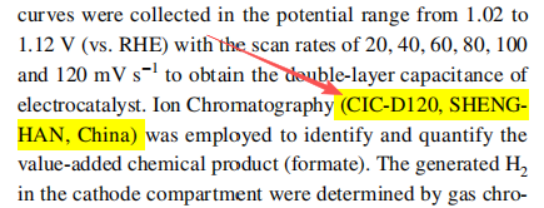
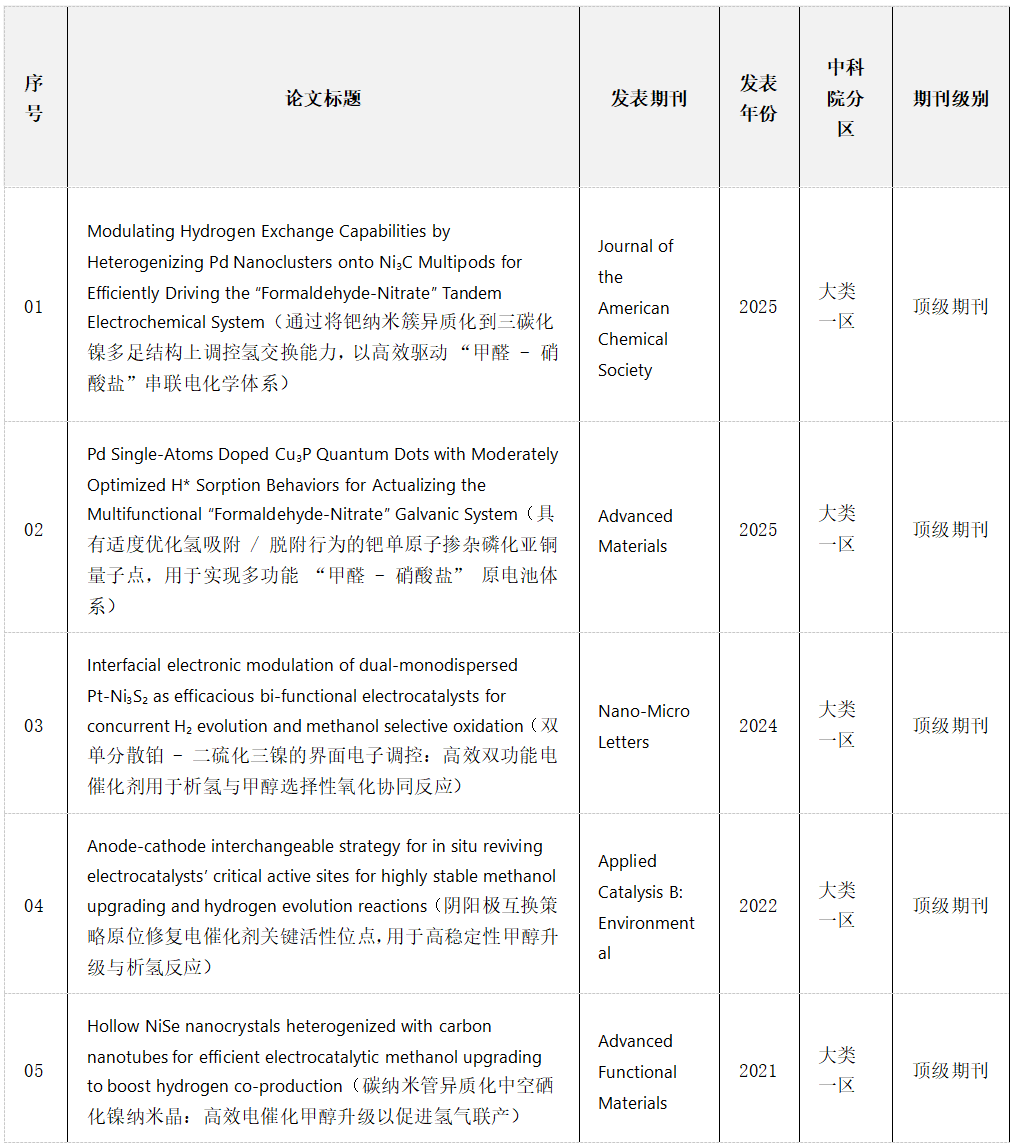
"Interfacial Electronic Modulation of Dual-Monodispersed Pt-Ni₃S₂ as Efficacious Bi-Functional Electrocatalysts for Concurrent H₂ Evolution and Methanol Selective Oxidation" was published in Nano-Micro Letters, another top-tier journal in CAS Category I. It marks another breakthrough by Zhao Bin's team in the field of electrocatalytic multifunctional synergy. Focusing on the industrial demands for hydrogen production and high-value utilization of methanol, the study proposes an interfacial electronic modulation strategy for dual-monodispersed platinum (Pt)-nickel trisulfide (Ni₃S₂) catalysts.
From undertaking national major scientific instrument development projects to empowering university teams to publish in international top journals, SHINE has always been centered on "technology leadership". It provides independently developed chromatographic instruments for scientific researchers. In the future, SHINE will continue to deepen its "IC+" ecological layout, constantly iterate product technologies, optimize service systems, and provide more accurate, efficient, and convenient detection solutions for university research. It will work hand in hand with scientific researchers to overcome more technical challenges and jointly write a new chapter of domestic instruments empowering academic innovation!